

Your analysts ran the test correctly. The result is right. But when the assessor pulls a report from six months ago and asks you to show the load frame, the extensometer calibration and the specimen conditioning record behind it, the trail goes cold. That's a finding. And in ISO/IEC 17025 audits, findings like this are far more common than findings about the science itself.
For lab managers in materials testing and biopharma QC, audit readiness isn't really about knowing the standard. It's about making sure every record is complete, traceable and findable on any given day. Here's what that takes, and how AI agents make it sustainable.
Three clauses do most of the work:
A single tensile test to an ASTM or ISO method depends on the load frame and load cell ID, extensometer calibration status, specimen dimensions, conditioning temperature and humidity, test speed and the method revision. Miss one and the result can't be fully reconstructed. Multiply that by hundreds of specimens a week across hardness, impact, fatigue and chemical analysis, and gaps are inevitable without a system watching for them.
An HPLC assay record needs the instrument and column ID, reference standard lot and expiry, system suitability results, the analyst's training on the current method version and a complete audit trail. If your lab also works under GMP, the same records must meet ALCOA+ data integrity expectations, so a gap in one framework is usually a gap in both.
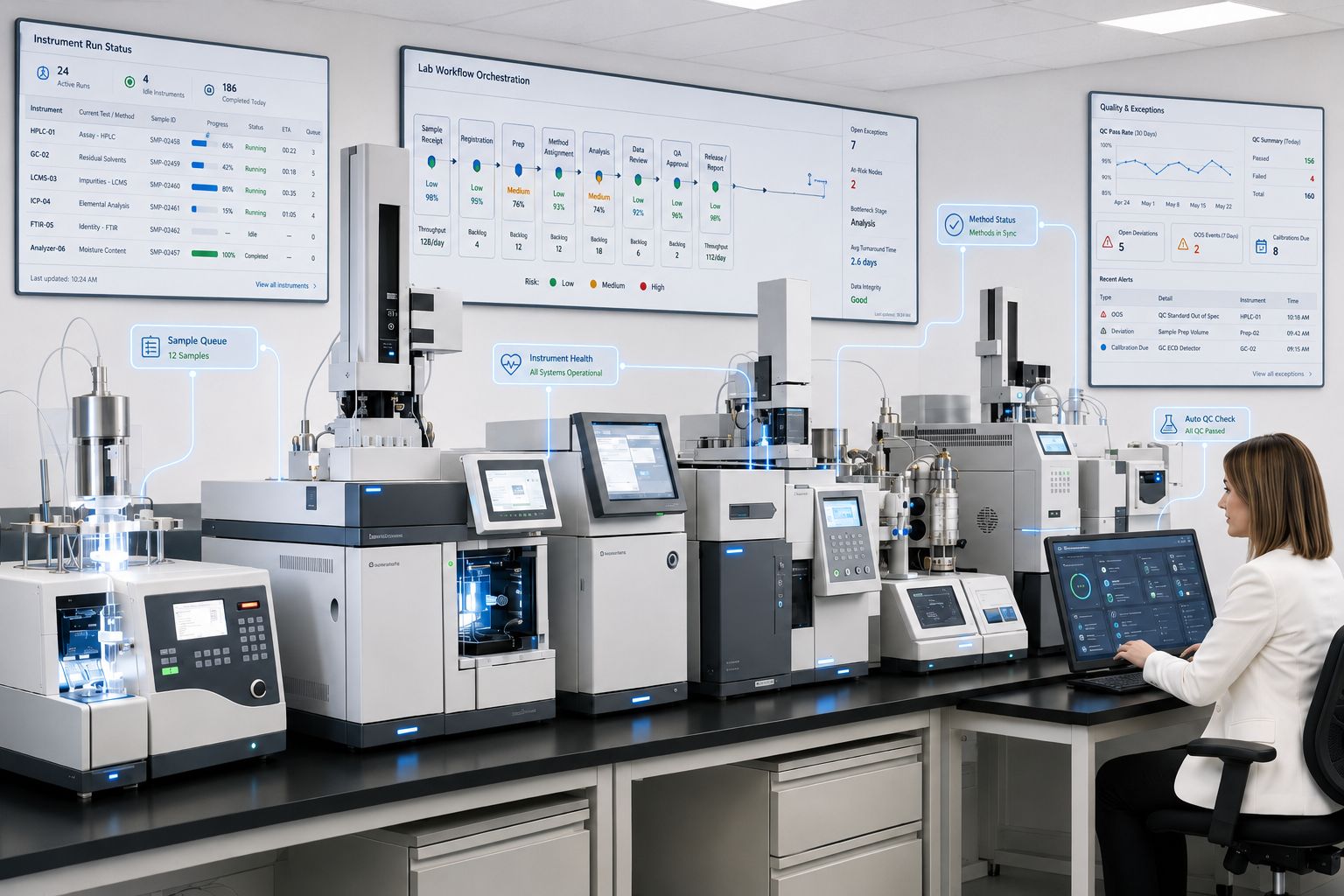
An AI agent doesn't replace your LIMS or quality system. It watches them and checks every completed test against your own completeness rules as it happens:
Gaps are flagged within hours, while the analyst still remembers the run, not six months later in front of an assessor. When an SOP is revised, the agent identifies everyone whose training now points to a superseded version and drafts the re-acknowledgement tasks.
Accredited labs can't hand judgment to software, and they shouldn't. In Trucision's approach, agents draft, link and flag. Every decision is cited back to its source record and signed by a person. Your audit trail shows what the agent suggested and who approved it, which is exactly the transparency assessors look for.
If any answer is "not sure," your records are relying on effort rather than on the system.
Technical records with enough information to repeat the test or calibration, including the personnel involved, equipment used, date and any amendments traceable to the original record.
Yes, as a support tool. The lab remains responsible for results. AI that flags and drafts, with documented human review and sign-off, fits within the standard's requirements for control of data and information management (clause 7.11).
Yes. Complete, attributable and traceable records are central to both ISO/IEC 17025 and GMP data integrity expectations, so improving one strengthens the other.
Ready to stop preparing for audits and start staying ready? Join the Trucision design partner program and pilot continuous records checks in your lab free for 8 to 12 weeks.

AI driven lap operations for regulated industries.Predictive diagnostics, service monetization, and compliance-grade telemetry for instrument OEMs.
BUILT FOR SECURE OEM DEPLOYMENT