

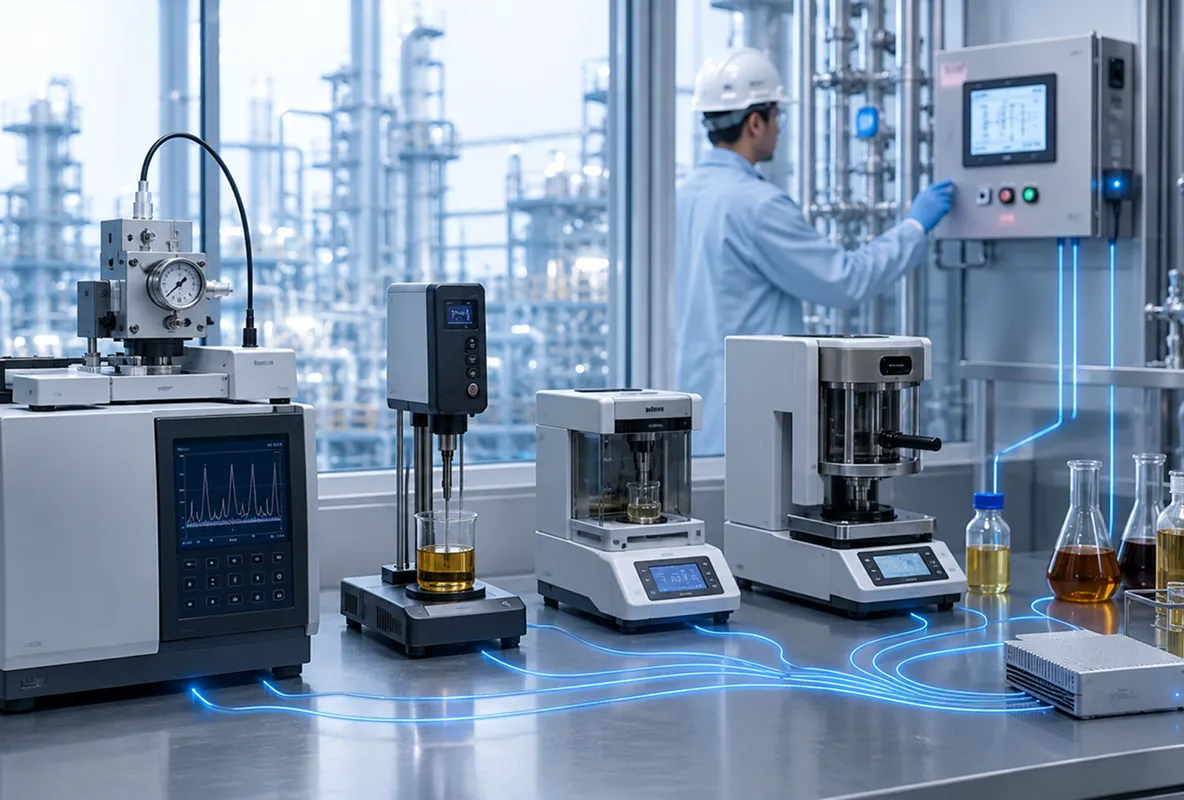
An instrument goes down. Someone emails the vendor. The service engineer asks for the error code, the model, the serial number and what happened. Two days later they arrive on site, diagnose the issue, and order a part. Another week passes. The instrument was down for nine days, and most of that time was spent exchanging information.
Materials testing: a UTM controller fault is diagnosed remotely from its error history, and the engineer arrives with the right part on the first visit.
Biopharma QC: a failing HPLC pump seal is flagged early, a service request is raised with pressure trends attached, and the repair is scheduled outside critical release windows.
Yes, with controls. Access should be authorized, limited, encrypted and logged, and any changes made remotely should follow your change control process.
Clause 6.4 requires records of equipment including maintenance, damage, malfunction, modification and repair.
Trucision was built around these criteria. Explore Lab Agent OS or book a 30-minute call.

AI driven lap operations for regulated industries.Predictive diagnostics, service monetization, and compliance-grade telemetry for instrument OEMs.
BUILT FOR SECURE OEM DEPLOYMENT