Lab Software Integration Checklist: LIMS, ELN, CDS and QMS Interoperability

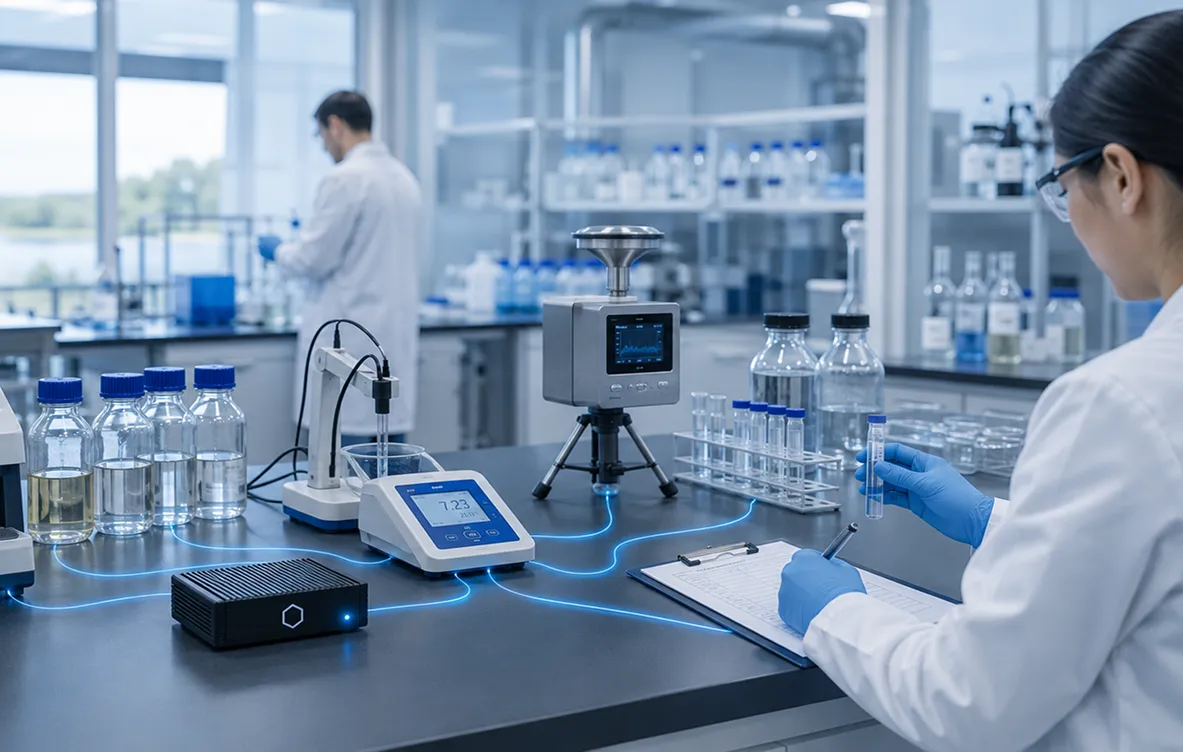
Connected laboratory systems including LIMS, ELN, CDS and QMS sharing data

The average regulated lab runs a LIMS, a chromatography data system, an ELN, a QMS, a calibration tool and a stack of spreadsheets. Every new tool promises to "integrate." Few explain what that means, and fewer explain what happens to your audit trail when data moves between systems.

7 criteria for lab software integration

  1. Published, supported APIs. Integrations should use your vendors' documented interfaces, not screen scraping or unsupported database access that breaks on the next upgrade.
  2. Open lab standards. Support for standards such as SiLA 2 and OPC UA LADS reduces lock-in and makes adding instruments easier.
  3. Read from the system of record. Data should come from the original source, not exported copies, to preserve data integrity.
  4. Controlled writes. Anything written back into a validated system should go through human approval and leave a record.
  5. One audit trail across systems. You should be able to follow a result from instrument to report, including every system and person it passed through.
  6. No custom middleware you have to maintain. Integrations that need a dedicated developer to keep alive become a liability.
  7. Phased rollout. Start with one system and one workflow, prove value, then expand.

Common integration pitfalls

  • Point-to-point integrations that multiply with every new tool.
  • Exports to spreadsheets that become uncontrolled "shadow" records.
  • Integrations validated once and never re-checked after vendor upgrades.

What it looks like in practice

Materials testing: test results from a UTM flow into the LIMS, calibration status comes from the calibration system, and nonconformities land in the QMS, all linked to the same specimen.

Biopharma QC: CDS results, LIMS sample data, ELN notes and QMS deviations come together in one view for review, without copying data between systems.

FAQ

What is SiLA 2?

An open standard for lab instrument and software communication, designed to make devices and systems interoperable regardless of vendor.

What is OPC UA LADS?

The Laboratory and Analytical Device Standard, an OPC UA companion specification that defines a common way to describe and communicate with lab devices.

Trucision was built around these criteria. See supported integrations or book a 30-minute call.

Get started

Find the right plan to modernizeyour product line

We work with OEM product and service leaders to identify the highest-value starting pointy- whether that’s a specific instrument line, a service tier launch, or a compliance gap. Most engagement scope in one session.
Name *
Company
Email *
Role
What are you working on ? *

Thanks!
Your form has been submitted.

Please complete all mandatory fields before submitting.