

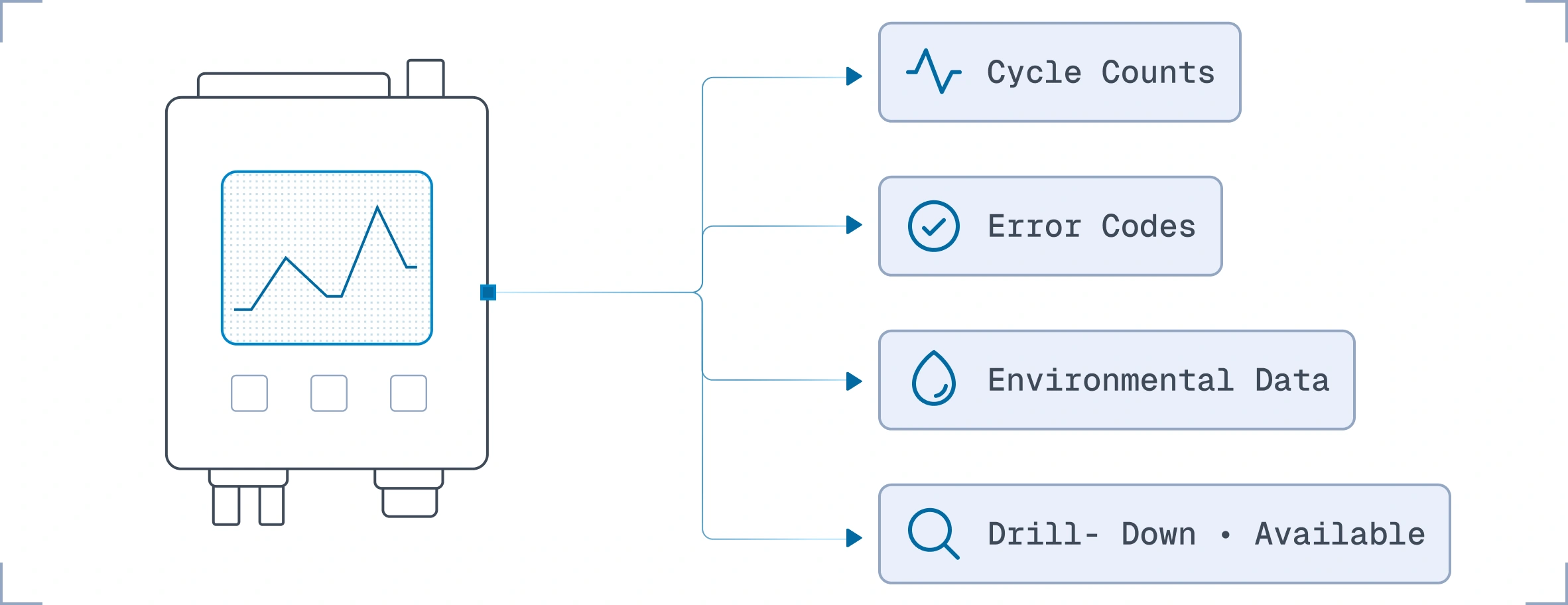
Most labs know when an instrument is down. Far fewer know when one is about to be. Between "running fine" and "broken" sits a long stretch of yellow: rising error counts, slow drift, longer run times and soft QC warnings that nobody is formally tracking.
That yellow zone is where real-time instrument monitoring earns its keep.
Materials testing: a load frame's error rate creeps up over three weeks. Spotting the trend means scheduling service before a batch of specimens is tested on a failing machine.
Biopharma QC: HPLC pump pressure fluctuations increase steadily. Catching that early can prevent a system suitability failure in the middle of a release run.
Uptime measures whether the instrument was on. Availability measures whether it was usable when work needed it, which is what affects turnaround time.
Yes. Clause 6.4 requires equipment to be fit for purpose and maintained. Continuous condition records strengthen the evidence that it was.
Trucision was built around these criteria. Explore Lab Agent OS or book a 30-minute call.

AI driven lap operations for regulated industries.Predictive diagnostics, service monetization, and compliance-grade telemetry for instrument OEMs.
BUILT FOR SECURE OEM DEPLOYMENT