Recurring Instrument Failures: How Labs Find the Pattern Before the Next Breakdown

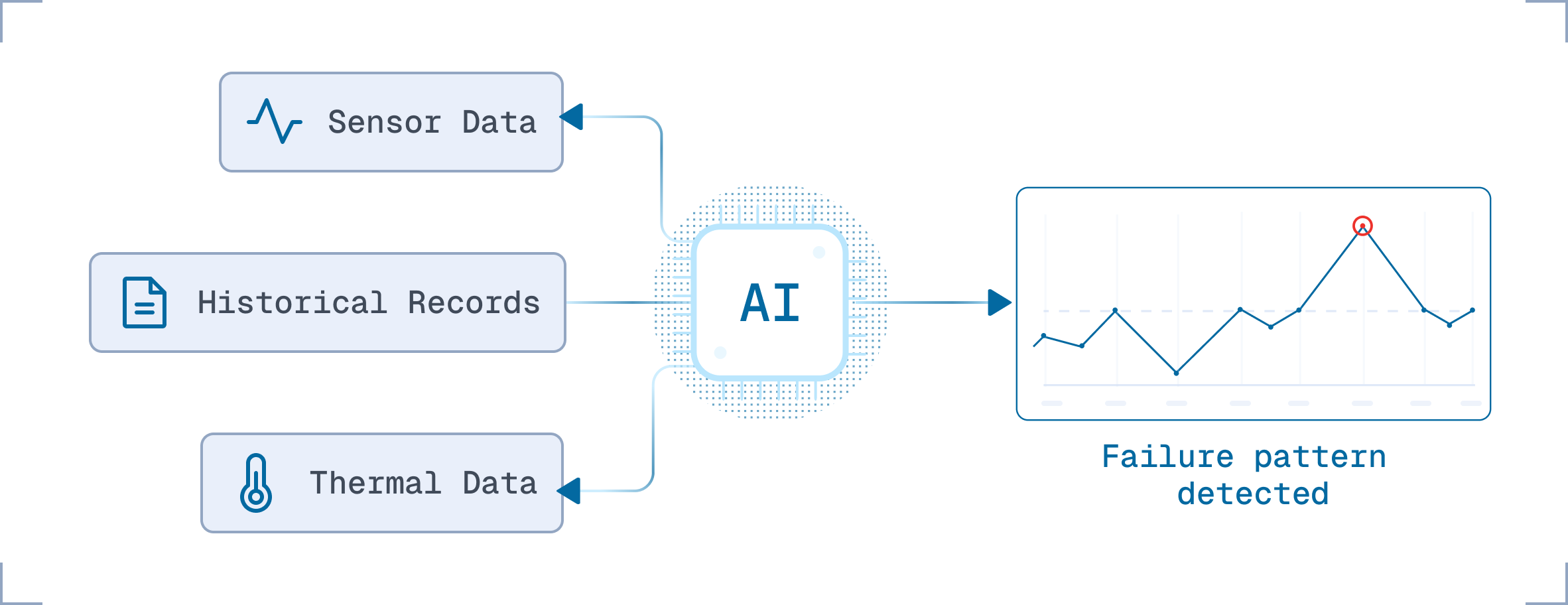
AI-powered failure pattern recognition across laboratory instruments

The same instrument fails the same way three times in a year. Each time, a technician fixes it, a service report is filed, and the lab moves on. Nobody connects the three events, because they live in three different places: the service log, the deviation system and someone's memory.

Recurring failures are expensive, but they're also predictable once you can see the pattern.

7 criteria for recurring failure analysis in labs

  1. Compare across instruments and sites. A failure on one instrument becomes far more useful when you can see whether others of the same model are heading the same way.
  2. Connect failures to conditions. Usage intensity, environment, operator, method and consumable lot all matter. Analysis should link failures to the conditions around them.
  3. Combine data sources. Error logs, maintenance records, calibration results and deviations should be analyzed together, not separately.
  4. Explain the pattern. A flagged pattern should come with the evidence behind it, so engineers can verify it rather than trust a black box.
  5. Rank by impact. Prioritize patterns by downtime, investigations triggered and results at risk, not just by frequency.
  6. Feed corrective action. A confirmed pattern should flow into your CAPA process with the evidence attached.
  7. Learn from outcomes. When a fix works, or doesn't, that should improve future detection.

What it looks like in practice

Materials testing: grip slippage on tensile tests clusters on one machine model during high-humidity months. That's a root cause, not three separate incidents.

Biopharma QC: repeated baseline noise on several HPLCs tracks back to a specific mobile phase preparation step, not to the instruments themselves.

FAQ

How many failures do you need before a pattern is meaningful?

It depends on the failure and the fleet size. Comparing across similar instruments often reveals patterns faster than waiting for repeats on a single one.

How does failure pattern analysis relate to ISO 17025 corrective action?

Clause 8.7 asks labs to determine whether similar nonconformities exist or could occur. Cross-instrument pattern analysis answers exactly that question.

Trucision was built around these criteria. Explore Lab Agent OS or book a 30-minute call.

Get started

Find the right plan to modernizeyour product line

We work with OEM product and service leaders to identify the highest-value starting pointy- whether that’s a specific instrument line, a service tier launch, or a compliance gap. Most engagement scope in one session.
Name *
Company
Email *
Role
What are you working on ? *

Thanks!
Your form has been submitted.

Please complete all mandatory fields before submitting.