
Quick Links

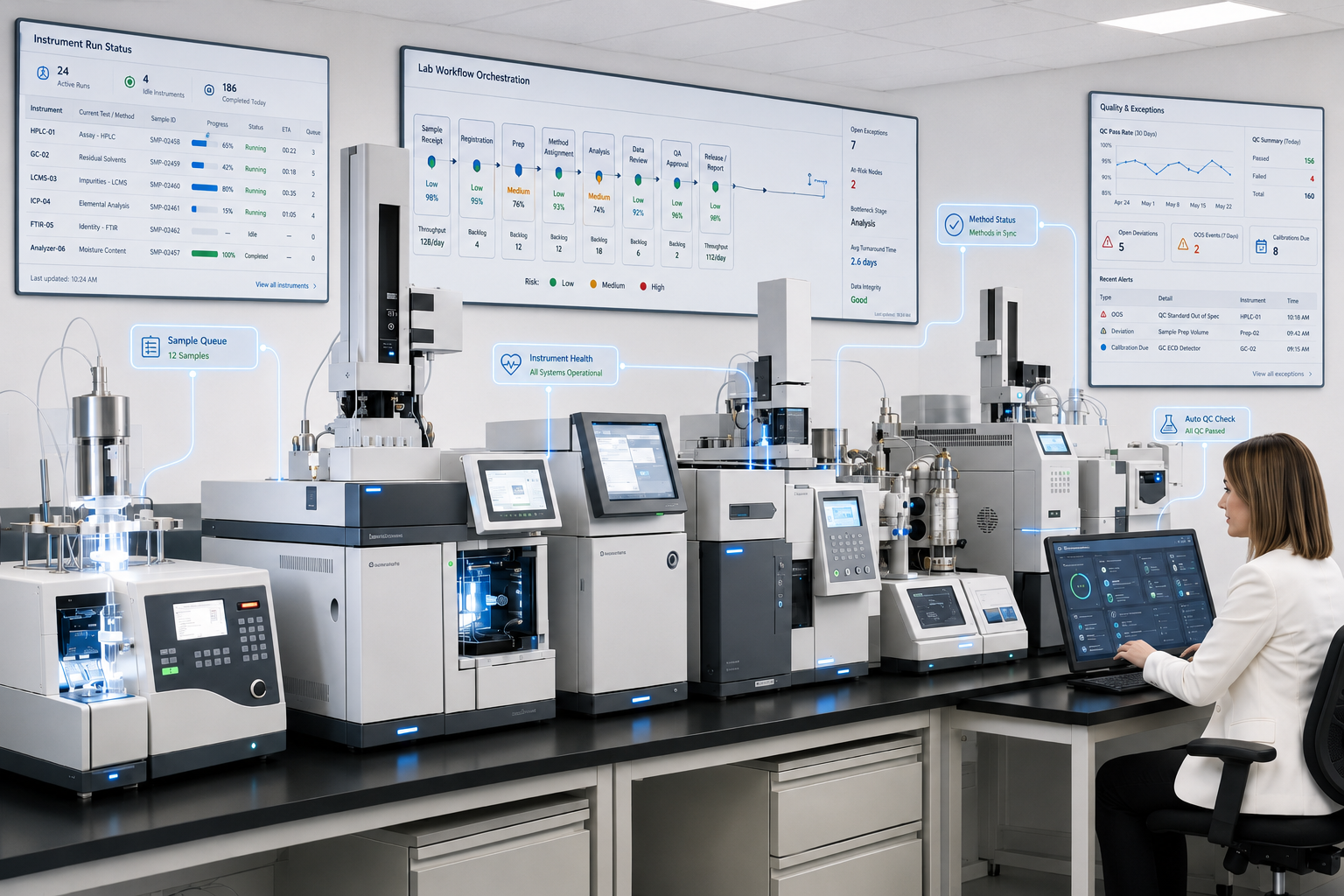
LIMS are good at record-keeping. They are weak at running the business of a lab. That gap shows up fast once throughput, uptime, and credibility matter more than paperwork.
Result Centeric Record Keeping
Instrument Centric Logs
LIMS are good at record-keeping. They are weak at running the business of a lab. That gap shows up fast once throughput, uptime, and credibility matter more than paperwork.
Here are the metrics lab managers actually ask for — and why most LIMS can’t answer them.
LIMS can tell you an instrument was used.
They can’t tell you how often it was unavailable when needed.
What matters:
This is a revenue metric disguised as ops.
LIMS assumes data is valid once stored. Reality disagrees.
What managers want:
If you can’t quantify trust, auditors and customers will.
“How many more samples could we process this week if demand spikes?”
LIMS answers last month. Leaders need:
This is planning, not reporting.
Most rework never gets logged as “failure.”
What gets missed:
LIMS logs outcomes. Labs bleed in the middle.
Two methods can both be “validated” and behave wildly differently in practice.
What leaders want:
This determines scalability — and whether AI will help or hurt.
LIMS tracks actions, not strain.
The real question:
Burnout shows up here long before attrition.
Customers don’t pay for raw outputs. They pay for decisions.
What matters:
This is where modern labs win or stall.
LIMS is silent on compounding risk.
Leaders need visibility into:
Risk doesn’t announce itself. It accumulates.
Bottom Line
LIMS optimize traceability. Lab leaders optimize throughput, trust, and resilience. The next generation of lab management metrics won’t live inside LIMS. They’ll sit above it, fusing instrument telemetry, workflows, human behavior, and context.
This post was written by the author and edited with assistance from OpenAI’s ChatGPT.


