

For lab operators · QA · Operations · IT · Procurement
Real-time instrument health monitoring, predictive calibration alerts, and audit-ready data integrity — without replacing your validated equipment.
Whether you're managing compliance in a GMP pharmaceutical lab, running a multi-instrument contract testing facility, or overseeing process analyzers in a regulated plant — Trucision gives your team the visibility to prevent failures before they happen and the documentation to prove it when auditors ask.

21 CFR Part 11
ISO 13485
SOC 2 Type II
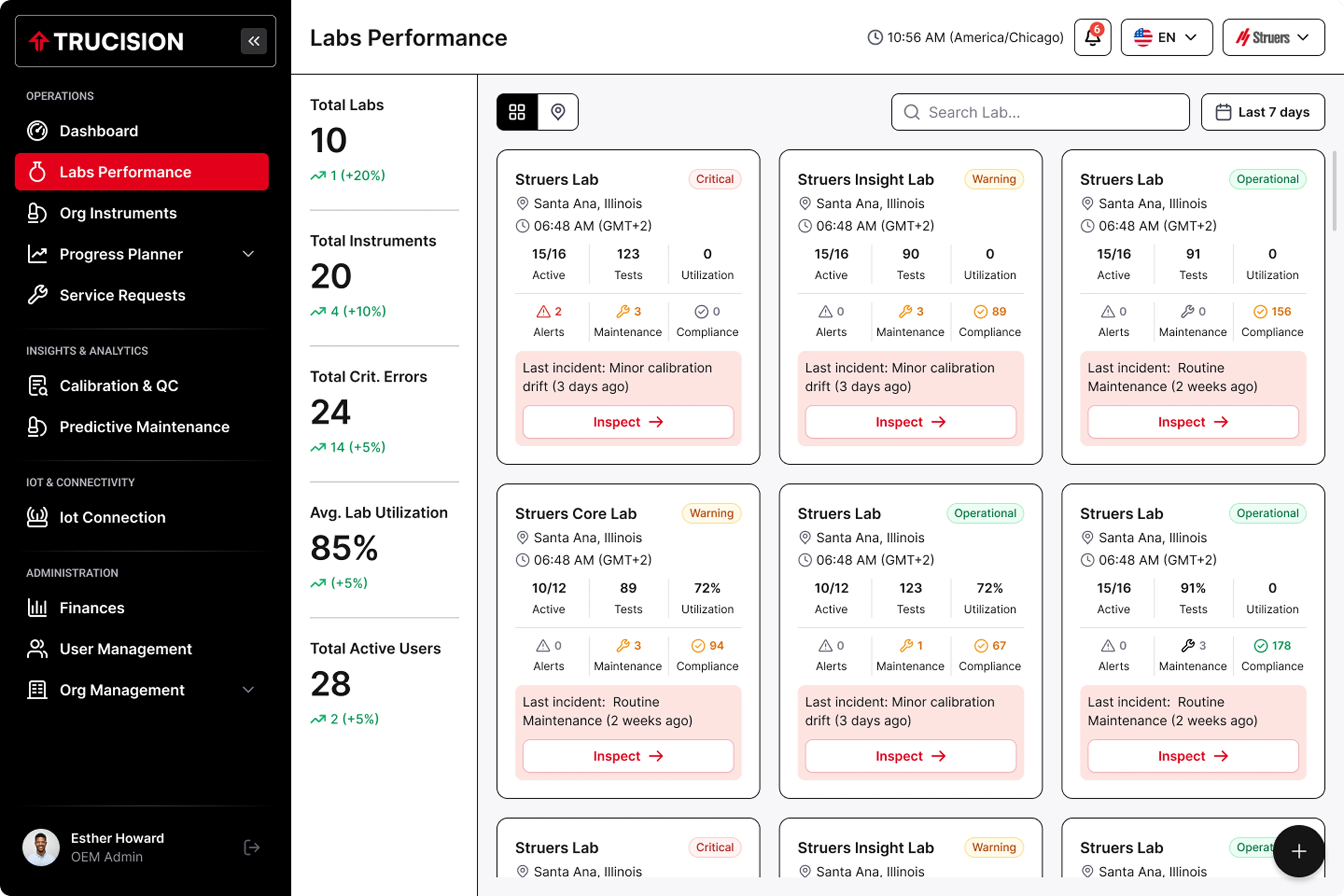

built for your whole team
Instrument reliability touches quality, operations, It, and procurement. Here's what each team gets.

OOS investigations, audit trail gaps, and calibration failures — discovered by your auditor before your team.

Automatic CAPA record generation — timestamped, sensor-anchored, audit-ready
ALCOA+-compliant data chain of custody on every instrument data point
Calibration drift alerts 48–72 hours before instruments cross a compliance threshold
Inspection-ready dashboards — give the auditor a URL, not a binder

48–72 hour advance failure prediction across calibration drift, thermal variance, and component wear
Remote diagnostics shared with your service team accelerate resolution — often without needing an on-site dispatch
Condition-based maintenance scheduling replaces fixed-interval guesswork
Utilization data to justify instrument investment — and flag what’s being underused

Every instrument vendor has a different data format. your LIMS doesn’t know the instrument’s health state. and IoT devices create security exposure.
MQTT and REST integration with LIS — no proprietary protocol lock-in
Pre-built connectors for major LIMS, ELN, and cloud data platforms
Works in air-gapped and restricted-network environments with on-device buffering
Role-based access control, immutable audit logs, SOC 2 Type II

Fixed service contracts don’t reflect actual usage. emergency calls are expensive. you have no data to negotiate from at renewal.
Utilization and failure mode data to negotiate your next service contract from evidence, not estimates
Your own visibility into service SLA performance — your operational data alongside your vendor’s reporting
Condition-based service models replace flat annual fees
Before/after service cost baseline — quantify ROI for leadership
key outcomes — for your lab
failure prediction window
Average advance notice before an instrument failure — across calibration drift, thermal variance, and component wear signatures detected in real time.
reduction in unplanned downtime
Labs using condition-based monitoring reduce fixed-interval PM schedules with data-driven calibration and service windows.
remote case resolution
Of instrument service cases diagnosed and resolved remotely — a faster resolution path that your service team can activate without an on-site visit.
time to first alert
From instrument connection to first predictive health alert — including telemetry schema setup and first model deployment.
your industry, your compliance framework
Select your industry to see how Trucision maps to your specific compliance environment, instrument types, and risk profile.
21 CFR Part 11 • 21 CFR Part 211 • EU GMP Annex 11 8 • ICH Q10 • ALCOA+
HPLC and LC/MS systems
Gas chromatographs (GC)
UV/VIS and IR spectrophotometers
Dissolution testers
pH meters and karl Fischer titrators
Environmental monitoring sensors (temperature, humidity, particle counts)
Calibration drift found during batch release testing — batch hold, OOS investigation, potential rejection
OOS result caused by instrument failure, not sample failure — investigation, regulatory reporting obligation
Audit trail gaps in electronic records — FDA Form 483 observation, warning letter risk
Fixed-interval calibration misses drift between cycles — instruments used out-of-spec without anyone knowing

ISO 13485 • 21 CFR Part 820 • EU MDR/IVDR • ISO 9001
Tensile and compression testers
Coordinate measuring machines (CMM)
Particle counters and cleanroom monitoring systems
Hardness testers
Surface roughness and optical profilometers
Environmental monitoring sensors
Instrument failure during a production run — DHR gap on all parts produced during that window
IQ/OQ/PQ documentation manually maintained — recertification is expensive, slow, and error-prone
Cleanroom environmental excursion not caught in real time — batch quarantine, corrective action, potential recall
CAPA records created reactively with incomplete instrument context — investigation takes longer, findings are weaker
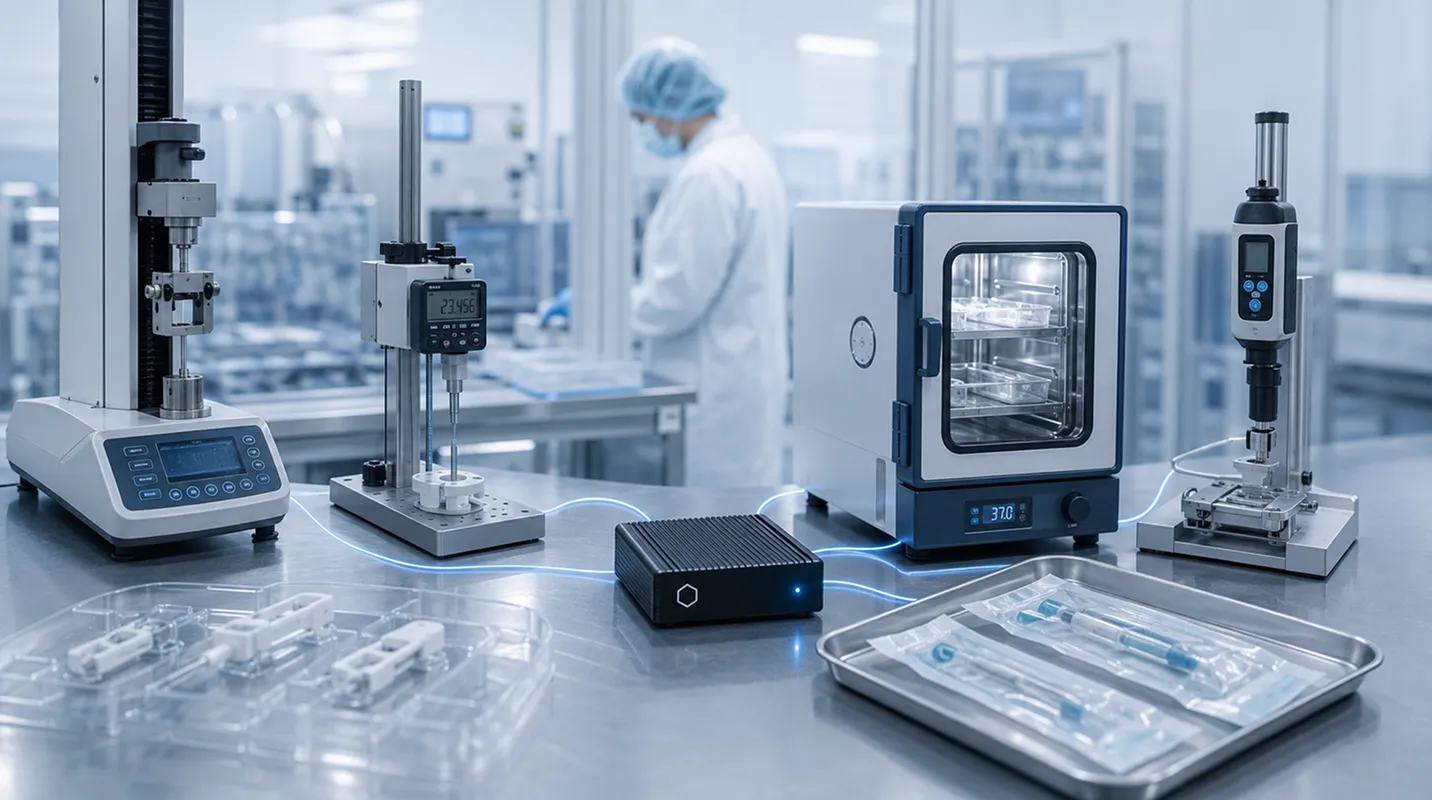
outcome 1
Calibration drift alerts notify your qa team before instruments go out of spec — not after a failed qc sample identifies the problem.
outcome 2
Every instrument event, calibration state, and data point carries a complete alcoa+ chain of custody: instrument id, operator identity, timestamp, environmental conditions. system-generated, tamper-evident.
outcome 3
When an OOS result occurs, trucision provides the instrument health history for the preceding 72 hours — the first thing an investigator needs and the thing that typically takes two days to reconstruct manually.
fda fsma • iso 22000 • haccp • sqf • brc global standards
Moisture and water activity analyzers
Near-infrared (NIR) analyzers
Texture analyzers and rheometers
pH meters and titrators
Checkweighers and X-ray inspection systems
Environmental monitoring sensors
Instrument failure at a HACCP critical control point — line stop, potential product hold or recall risk
Calibration drift in moisture or NIR analyzers — incorrect QC results — shelf-life or food safety risk
Manual calibration logs fail FSMA supplier verification audit — corrective action required, audit finding on record
Emergency service call during peak season — 2–5 day wait for a field technician

outcome 1
Calibration drift alerts notify your qa team before instruments go out of spec — not after a failed qc sample identifies the problem.
outcome 2
Every instrument event, calibration state, and data point carries a complete alcoa+ chain of custody: instrument id, operator identity, timestamp, environmental conditions. system-generated, tamper-evident.
outcome 3
When an OOS result occurs, trucision provides the instrument health history for the preceding 72 hours — the first thing an investigator needs and the thing that typically takes two days to reconstruct manually.
iso 17025 • a2la accreditation • nelap / tni standard • nelap / tni standard
ICP-MS and ICP-OES systems
GC/MS and GC-FID systems
TOC analyzers
Ion chromatographs
Atomic absorption spectrometers
Flow injection analyzers
Instrument drift between QC sample runs — client sample results affected before drift is formally detected
Accreditation renewal: manually maintained equipment logs — auditor findings, potential scope reduction
Turnaround time pressure: instrument downtime during hold-time sample window — sample invalidation
Matrix interference or detector degradation between calibration cycles — not caught until QC fails
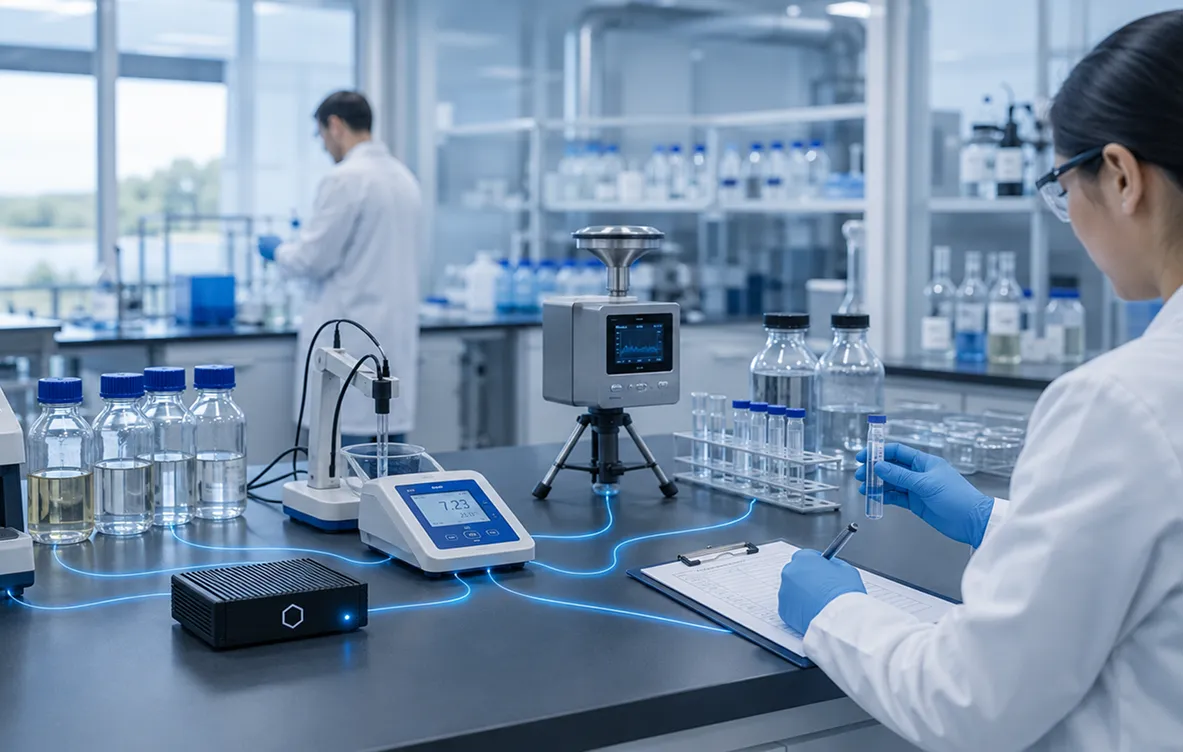
Calibration drift alerts notify your qa team before instruments go out of spec — not after a failed qc sample identifies the problem.
Every instrument event, calibration state, and data point carries a complete alcoa+ chain of custody: instrument id, operator identity, timestamp, environmental conditions. system-generated, tamper-evident.
When an OOS result occurs, trucision provides the instrument health history for the preceding 72 hours — the first thing an investigator needs and the thing that typically takes two days to reconstruct manually.
OSHA PSM • API Standards • ATEX / IECEx • ISO 9001 / ISO/IEC 80079
Process gas chromatographs (process GC)
Viscometers and rheometers
Karl Fischer water content analyzers
Flash point and distillation testers
Online and at-line NIR and Raman analyzers
ATEX-rated process analyzers in classified areas
Process GC downtime in a refinery — quality decisions made without analytical data — process safety risk or specification failure at product transfer
ATEX instrument failure in a hazardous classified area — field service entry requires confined-space protocols — days of delay before diagnosis
Fixed PM schedule misses actual degradation — instrument fails between planned maintenance visits
Without remote pre-diagnosis data, dispatch occurs without confirmed root cause — increasing second-visit rates and the time before the right part is on site

outcome 1
Calibration drift alerts notify your qa team before instruments go out of spec — not after a failed qc sample identifies the problem.
outcome 2
Every instrument event, calibration state, and data point carries a complete alcoa+ chain of custody: instrument id, operator identity, timestamp, environmental conditions. system-generated, tamper-evident.
outcome 3
When an OOS result occurs, trucision provides the instrument health history for the preceding 72 hours — the first thing an investigator needs and the thing that typically takes two days to reconstruct manually.
GLP (21 CFR Part 58) • ISO 17025 • OECD GLP • Sponsor-specific SOPs
Multi-OEM analytical fleets (HPLC, GC, LC/MS, ICP — Agilent, Waters, Thermo, Shimadzu)
Stability chambers and environmental monitoring systems
Dissolution and disintegration testers
Spectrophotometers (UV/Vis, FTIR, Raman)
Online and at-line NIR and Raman analyzers
Sponsor audit finds instrument qualification gap — study data challenged — repeat testing cost and client relationship damage
Multi-OEM fleet: each vendor's data format and service portal — no unified instrument health view across the lab
Instrument failure during a GLP study — study integrity question — sponsor notification required under GLP regulations
Utilization imbalance: some instruments chronically overloaded, others underused — billing inefficiency and accelerated wear

outcome 1
Calibration drift alerts notify your qa team before instruments go out of spec — not after a failed qc sample identifies the problem.
outcome 2
Every instrument event, calibration state, and data point carries a complete alcoa+ chain of custody: instrument id, operator identity, timestamp, environmental conditions. system-generated, tamper-evident.
outcome 3
When an OOS result occurs, trucision provides the instrument health history for the preceding 72 hours — the first thing an investigator needs and the thing that typically takes two days to reconstruct manually.
platform capabilities
Numbers below reflect customer-validated outcomes and modeled impact across portfolios of 500+ deployed instruments.

See the operational state of every connected instrument in real time — cycle counts, error codes, environmental readings, and health scores. Know before your team does when something is about to go wrong.

Trucision models calibration drift from real usage data, not fixed-interval schedules. Your QA team receives an alert 48–72 hours before an instrument crosses a compliance threshold — not after a failed QC sample triggers the investigation.

Every instrument event generates a structured record — timestamped, operator-attributed, sensor-anchored, ALCOA+ compliant out of the box. When an auditor asks for the instrument history on a specific batch date, you pull a dashboard filter, not a binder.

When an instrument alerts, your service contact sees the same diagnostic data you do — often diagnosing and resolving the issue remotely before dispatching a technician. For labs in remote or access-restricted environments, this is not a nice-to-have.
better together
Trucision doesn't replace your instruments or your OEM service relationship. It gives both sides the same real-time diagnostic picture — so when something needs attention, everyone already knows what it is.
The instruments you've already purchased, qualified, and validated — HPLC systems, GCs, dissolution testers, process analyzers — don't need to be replaced or upgraded. Trucision's lightweight edge agent connects to what you have, reading instrument health data without modifying anything your QA team has validated.
Works on instruments purchased 3, 5, or 10 years ago
No firmware changes, no hardware modification, no re-qualification trigger
Connects to your existing LIMS and data infrastructure — no parallel system to maintain-based maintenance scheduling replaces fixed-interval guesswork

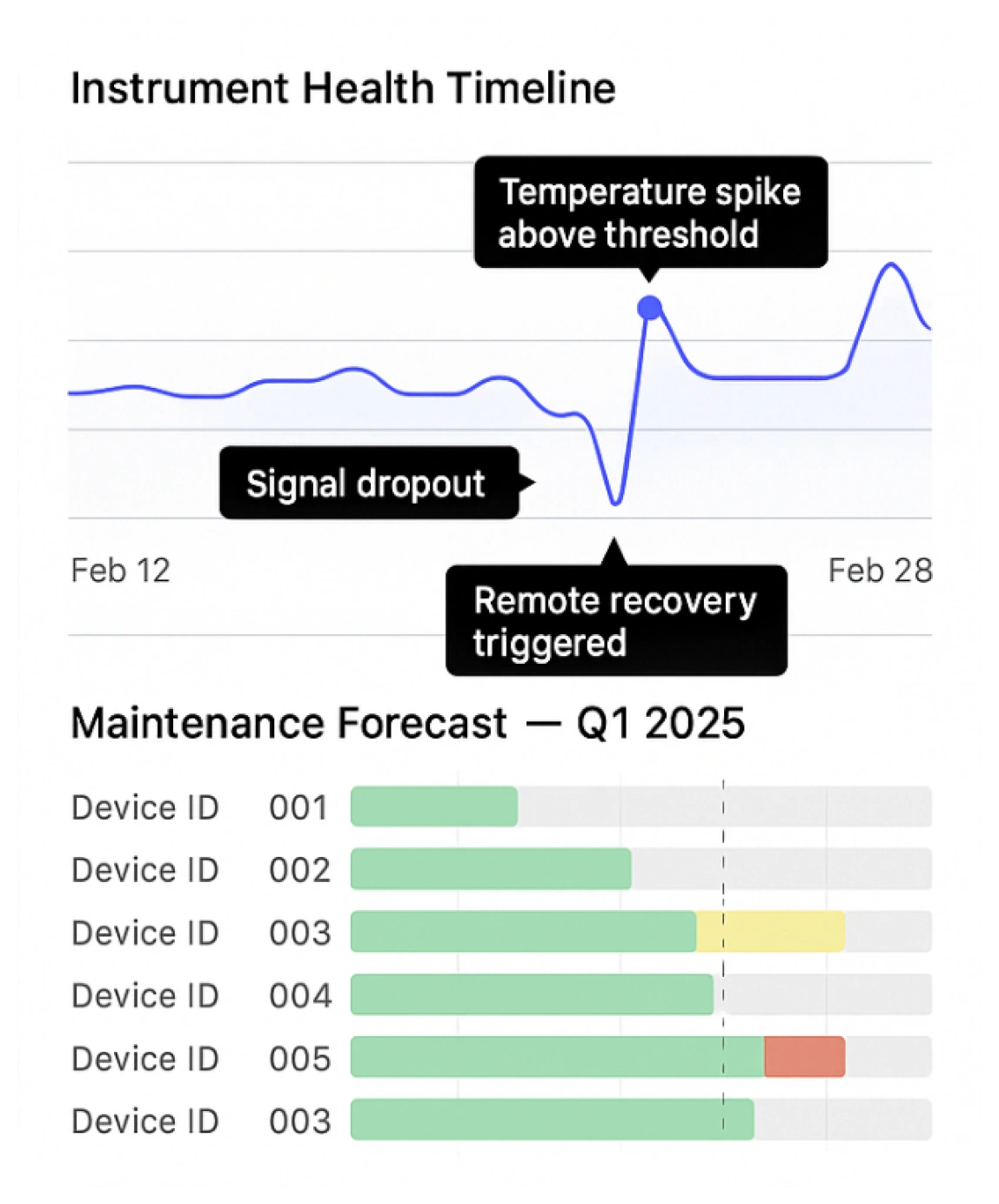
When your instrument alerts, your service contact sees the same diagnostic data you do — in real time. That means when a technician is dispatched, they arrive with a confirmed diagnosis, the right parts, and a resolution plan. Fewer second visits. Faster resolution. A service relationship that works the way it was supposed to.
Shared diagnostic dashboard — your team and your service contact, same data
Service calls start with a pre-confirmed diagnosis, not a symptom description
Service calls start with a pre-confirmed diagnosis, not a symptom description
data integrity & compliance
ALCOA+ means every data point must be Attributable, Legible, Contemporaneous, Original, and Accurate. Trucision enforces this at the instrument layer — not at the LIMS layer where it's already too late to fix a chain-of-custody gap.
From Instrument to Audit Trail
Every measurement carries its provenance: instrument serial number, calibration state at time of reading, operator ID, environmental conditions, and an immutable timestamp. This is ALCOA+ at the sensor layer — not reconstructed after the fact in a LIMS entry.
21 cfr part 11 and eu annex 11 ready
Electronic records are generated at the source, not transcribed from paper logs. Electronic signatures are linked to authentic user identities. Audit trails are system- generated and cannot be modified - meeting FDA and EU GMP requirements for computerized systems in regulated environments.
Capa without the manual work
When a deviation occurs, Trucision auto- generates a structured CAPA record: the triggering event, instrument sensor history for the preceding window, operator actions, and resolution steps. Date-stamped and locked at creation - ready for quality review without reconstruction.


An integration playbook designed for OEM engineering and service teams - not a SaaS rip-and - replace.

STEP 01
We review your instrument list, OS environments, and network architecture. We identify which instruments are connectable today and whether any require a gateway device. No site visit required for the initial scoping — this happens remotely.
STEP 02
Structured telemetry flows securely overMQTT or REST with TLS encryption-including in air-gapped or low-connectivity environments. Un-device buffering ensuresno data loss during network interruptions.
No re-validation of the instrument itself. The agent observes; it does not modify your validated state.
STEP 03
Data flows into your existing LIMS, ELN, orYour instrument's data schema is mapped, telemetry flows into the dashboard, and alert thresholds are set based on your QA team's specifications. First predictive health dashboard is live within two weeks of kickoff.
STEP 04
Your team has continuous visibility.Your QA lead gets compliance documentation automatically. Your service contact gets remote diagnostic access when somethingalerts. The system runs — and gets more accurate as it learns your specific instrument's operational baseline.
from the field
“This is going to do wonders for their service technicians. Instead of guessing, they can use this platform, see the key diagnostics, explained by evidences from full error history and and immediately understand what’s going on.”
- Lab Manager
US Lab Network
- SVP Procurement,
US Lab Network
Get started
We'll show you what your instrument data looks like in a Trucision dashboard — using telemetry patterns from instruments like yours. No commitment. One hour.

Compliance-grade instrument intelligence for regulated labs. Real-time health monitoring, automated deviation records, and audit-ready reporting — without replacing your instruments.
BUILT FOR REGULATED LAB OPERATIONS